
The Transatlantic Syncopation That Rewrote Modern Groove
Highlife is often filed too quickly under nostalgic lounge music, a polished relic of colonial-era hotels and sepia-toned dance floors. That framing misses its voltage. Beneath the bright brass, relaxed guitar and elegant vocal lines sits a sophisticated act of musical re-engineering. Highlife was not passive imitation, and it was never simply “African music” dressed in European clothing. It was an urban West African technology for turning imported instruments, dances and harmonies toward local social realities.
Picture the acoustic scene: an Akan dawuro bell marking a cyclical timeline, a fingerpicked guitar threading interlocking figures through the air, and trumpets lifting above the crowd with celebratory force. The result could sound effortless, but its ease was carefully constructed. The listener who explores Highlife Giants encounters a tradition shaped by musicians who moved between languages, ports, churches, taverns, military bands and independence-era nightclubs.
The central story is one of structural transformation. West African musicians absorbed brass-band sonorities, Christian hymnody, jazz harmony, calypso movement and colonial instruments, then reorganized them around indigenous rhythmic principles. From early twentieth-century coastal ports to the electrifying dance bands of Accra and Lagos, highlife converted the instruments of empire into a grammar of local pleasure, commentary and collective movement.
The Foundational Pulse of the 12/8 Bell Pattern
To understand highlife, start with the timeline rather than the melody. In many West African performance traditions, rhythm is organized through repeating cycles that provide a shared temporal map for the ensemble. The cycle is not merely a count-in or background click. It is a field in which contrasting parts can remain independent while still locking together. A bell, drum, bassline, guitar and horn may each articulate different points in the cycle, yet the combination produces a recognizable communal orientation.
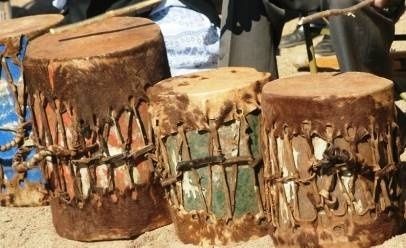
The Akan bell pattern is frequently heard within a 12/8 framework, a compound subdivision that can be felt as four groups of three. Its asymmetrical accents resist the square predictability of a Western metronome. Rather than telling every musician exactly where to place a note, the bell establishes a flexible anchor against which players can lean, answer and suspend. The groove remains stable because the cycle returns, but it remains alive because the internal accents create friction.
| Western common-time feel | Akan cyclical groove |
|---|---|
| Four primary beats often treated as equal reference points | A repeating timeline with contrasting subdivisions and accent points |
| Backbeat emphasis commonly organizes dance movement | Layered cross-accents distribute motion across bell, drums, guitar and bass |
| Time can feel linear, moving from bar to bar | Time feels circular, with phrases continually returning to the cycle |
| Ensemble cohesion often depends on a shared meter | Cohesion emerges from interlocking parts occupying different rhythmic roles |
The physical effect is propulsion without blunt force. A cross-accent lands where the body does not initially expect it, then the repeating cycle makes that surprise feel inevitable. Dancers are not simply following a beat; they are negotiating several simultaneous streams of time. This is why highlife can feel both buoyant and grounded, with a relaxed surface concealing an intricate engine beneath.
From Coastal Taverns to Kumasi: The Palm Wine Fingerpicking Genesis
Palm wine music grew in the social world of coastal West Africa, where Kru sailors, dockworkers, traders and musicians carried instruments and repertories between ports. Informal gatherings around palm wine created an intimate setting for musical exchange. The guitar became especially powerful because it was portable, adaptable and capable of suggesting both harmony and percussion. In these spaces, music was not separated from conversation. Songs could entertain, advise, tease, mourn or criticize, often within the same performance.
Players adapted guitar technique through an indigenous sensibility associated with instruments such as the Akan seprewa harp-lute. Two-finger picking could divide the instrument into interlocking layers, with a recurring bass movement supporting treble figures that answered the voice. The guitar did not merely supply chords in the European sense. It became a miniature ensemble, combining pulse, counterpoint and melodic commentary in a single pair of hands.
- Fingerpicked independence: bass and treble figures operate as separate but coordinated rhythmic voices.
- Open-air intimacy: light percussion, rattles and guitar preserve conversational space around the singer.
- Flexible phrasing: vocal lines can stretch across the cycle while the guitar quietly maintains orientation.
- Local language and imagery: Akan proverbs, environmental knowledge and social observation give the music its intellectual weight.
Kwame Asare, known as Jacob Sam, helped establish the guitar-centered sound that fed directly into later highlife. Agya Koo Nimo extended the tradition with remarkable clarity, restraint and narrative detail. His playing demonstrates how sophistication can emerge from economy: a carefully placed bass note, a bright treble response and a vocal phrase allowed to breathe. The lyrical world is equally expansive, joining Akan philosophical storytelling with ecological reverence and sharp social commentary. Contemporary revival projects have drawn on this legacy to address deforestation, waste and illegal mining, showing that palm wine music remains a living vehicle for public thought rather than a museum style.
Subverting the Empire Through Dance Band Brass
Colonial military brass bands and missionary hymnody supplied highlife with some of its most recognizable colors, but the transfer was never one-way. Instruments associated with official ceremony were relocated into social spaces where musicians could bend their function. Trumpets, trombones and saxophones no longer announced imperial authority from a parade ground. They entered crowded dance halls, drinking spots and independence celebrations, where their brightness signaled aspiration, flirtation, humor and release.
E.T. Mensah and the Tempos became emblematic of this transformation. Mensah”s arrangements placed jazz trumpets and saxophones within Ghanaian rhythmic dynamics, allowing horn phrases to punctuate rather than dominate the groove. The brass could state a memorable hook, answer the singer or rise in a compact fanfare, while percussion and guitar kept the cyclical architecture intact. The music sounded cosmopolitan, but its movement was unmistakably rooted in local dance practice.
- Imported timbre, local placement: brass colors were retained while their phrases were organized around Ghanaian rhythmic cycles.
- Hymn transformed into dance: familiar melodic and harmonic gestures acquired syncopated, social energy.
- Nightlife as public culture: clubs became spaces where class, language and political possibility met.
- Prestige reclaimed: the ballroom image of refinement was redirected toward popular celebration and cultural confidence.
After the Second World War, urban nightlife expanded across Accra and Lagos. Rising cities, new recording opportunities and the approach of independence created an audience hungry for music that sounded modern without surrendering local identity. Highlife carried a productive social contradiction. It could signify elite ballroom polish, with tailored suits and disciplined horn sections, while also functioning as grassroots empowerment. The same arrangement might be heard by professionals in a formal club, by workers in a neighborhood venue and by young listeners imagining a postcolonial future.
The Cross-Border Cross-Pollination and Nigerian Evolution
Highlife traveled easily because its central ideas were portable. Musicians, records and touring bands moved between Ghana and Nigeria, and Nigerian performers reshaped the style through Yoruba, Igbo and other regional frameworks. In Lagos, the music absorbed the density of a major port city. In eastern Nigeria, guitar bands developed a more sustained, weaving approach, often emphasizing rolling ostinatos and vocal lines that could unfold over extended performances.
Artists such as Rex Lawson and Chief Stephen Osita Osadebe represent different dimensions of Nigerian highlife”s reach. Lawson”s music is associated with richly arranged, emotionally charged ensemble writing, while Osadebe”s work is celebrated for its spacious guitar interplay, conversational vocals and social atmosphere. Peacocks International likewise belongs to the broader guitar-band story, in which the dance floor becomes a setting for patient accumulation rather than abrupt impact.
| Ghanaian dance-band highlife | Eastern Nigerian guitar highlife |
|---|---|
| Prominent brass and reed sections | Layered guitar ostinatos and extended instrumental interplay |
| Compact horn hooks and arranged responses | Rolling counterpoint that sustains a long-form groove |
| Strong association with Accra nightlife and independence-era modernity | Deep connection to community dances, regional identity and Igbo social expression |
| Jazz and swing colors foregrounded in the arrangement | Guitar texture and vocal storytelling often carry the main architecture |
The difference is not a division between simple and complex styles. Both approaches depend on layered attention. In a guitar-led Nigerian band, one figure may repeat with hypnotic steadiness while another curls around it, creating a sound that feels continuously in motion even when the harmonic material changes slowly. The listener can enter a kind of flow state, not because the music removes detail, but because its details become predictable enough to inhabit and varied enough to reward concentration.
That immersive quality also has a social dimension. Highlife is designed for shared spaces, where dancers, singers and instrumentalists reinforce one another. A recent preprint study involving Nigerian medical students reported stronger recall and problem-solving performance among participants hearing culturally familiar instrumental Igbo highlife than among comparison groups, although such findings should be treated as emerging evidence rather than a universal claim about music and cognition. The result nevertheless points toward an important principle: familiarity is not passive background. It can shape how deeply a rhythmic environment is processed.
The Enduring Blueprint of Afro-Diasporic Groove
Highlife”s legacy is audible wherever a cyclical African timeline meets electric amplification, horn arrangement and urban songwriting. Fela Kuti”s Afrobeat drew on highlife”s brass vocabulary, guitar motion and ensemble logic while expanding the form into long political grooves. Modern Afrobeats often presents a cleaner, more electronic surface, yet its fascination with interlocking percussion, guitar-like melodic loops and conversational vocal placement continues the same architectural impulse.
Osibisa carried West African polyrhythmic funk onto international rock and progressive stages. Their sound enlarged the highlife palette with electric bass, percussion, amplified guitar and studio arrangement, demonstrating that the tradition could occupy a global festival or a hi-fi listening room without losing its rhythmic center. For vinyl collectors, the appeal lies in the physical evidence of that expansion: warm horn transients, hand-played percussion, guitar figures that sit slightly inside the beat and arrangements that reveal new inner lines with repeated listening.
- E.T. Mensah and the Tempos, “All for You”: a concise entry into the bright, horn-led dance-band language and its relationship to Ghanaian groove.
- Chief Stephen Osita Osadebe, “Osondi Owendi”: an expansive example of Nigerian guitar highlife, balancing repeated figures, vocal wisdom and communal lift.
- Osibisa, “Sunshine Day”: a vivid bridge between highlife”s rhythmic architecture, funk”s electric weight and international progressive-rock scale.
Preservation now takes several forms. Archives, reissues, oral histories, musician-led ensembles and youth training projects keep older techniques accessible, while DJs and contemporary producers isolate the bell, chop guitar phrases and rebuild the cycle inside club-oriented productions. Ghana”s highlife and dance traditions have also received increased international heritage attention, though recognition is only meaningful when it supports musicians, communities and active transmission.
Listen Deeper into the Polyrhythmic Current
Highlife is not a museum relic with a pleasant surface. It is a revolutionary compositional grammar, one that demonstrates how cultural power can operate through arrangement. Imported brass, church harmony, guitars and recording technology were not simply accepted or rejected. They were absorbed, redirected and made answer to indigenous concepts of time, movement and social speech.
On the next listen, separate the layers deliberately. Follow the bell or implied timeline first, then locate the bass, then trace the guitar counterpoint, and finally hear how the horns enter the gaps. The groove becomes larger as each part is isolated and then restored to the whole. That is highlife”s enduring cultural truth: West African polyrhythms reshaped modern global music from the inside out, turning borrowed tools into instruments of autonomy, pleasure and collective memory.

