
When Brazilian Elegance Collided with Cultural Rupture
João Gilberto”s guitar seems to arrive from another room. Its nylon strings are quiet but exact, carrying a clipped, syncopated pulse beneath a voice that barely rises above conversation. By the end of the 1960s, that hush had been jolted by electric feedback, distorted guitars, unruly brass, studio collage, and lyrics that treated Brazilian identity as a site of argument. The distance between those sounds was not simply a matter of changing fashion. It measured a country being forced to hear its own contradictions.
The 1964 military coup overturned Brazil”s democratic government and ushered in a dictatorship that lasted until 1985. Censorship, political persecution, exile, imprisonment, torture, and the suppression of public dissent altered the meaning of artistic choice. Under those conditions, an acoustic guitar could suggest refinement, national modernity, or political restraint, while an electric guitar could sound like an intrusion into the official picture of Brazil. The journey from Bossa Nova”s middle-class optimism to Tropicalia”s psychedelic collision became a story of artists testing how much disruption a popular song could contain.
The Architecture of Bossa Nova and Its Restrained Perfection
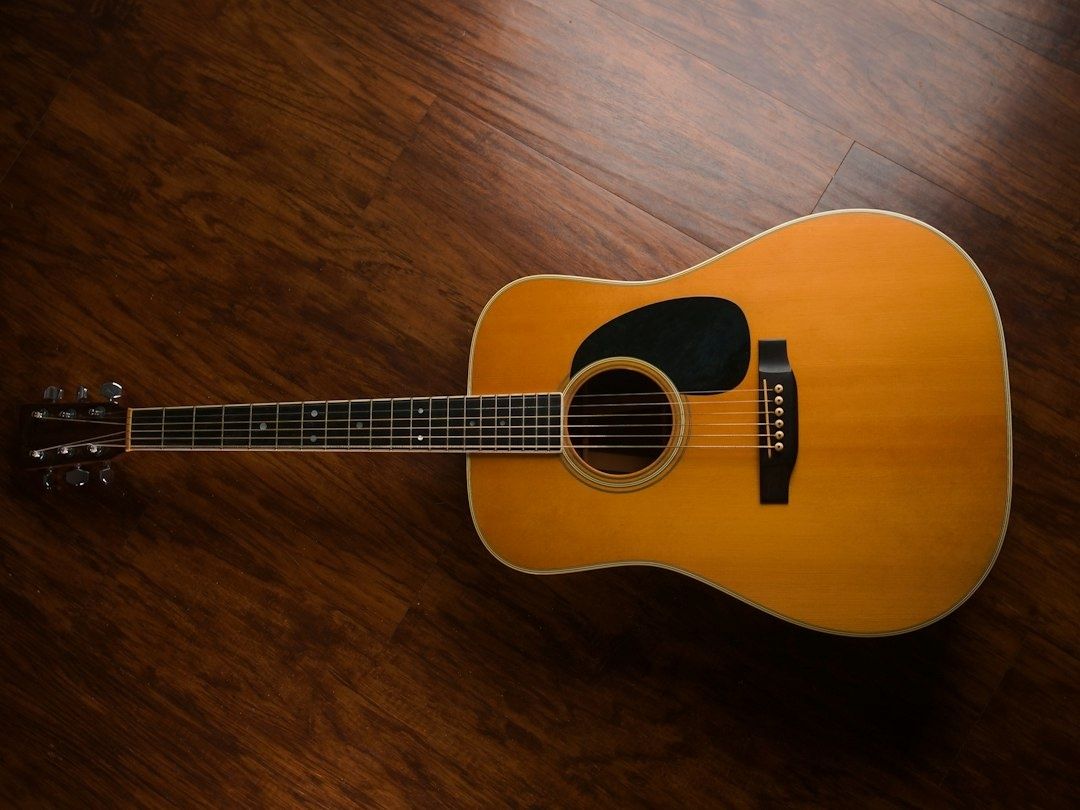
Bossa Nova”s revolution began with subtraction. João Gilberto”s playing, often associated with the phrase violão gago, or “stuttering guitar,” reorganized samba into a precise web of displaced accents. His right hand maintained a steady rhythmic engine while the thumb and fingers articulated chords and syncopations that seemed to lean against the beat. The effect was intimate rather than demonstrative. His vocal delivery followed the same principle, using softened consonants, narrow dynamics, and conversational phrasing instead of the projected theatricality common in earlier popular singing.
Antonio Carlos Jobim and Vinicius de Moraes supplied much of the movement”s compositional architecture. Jobim”s harmonies drew on classical impressionism, cool jazz, and the chromatic color of composers such as Debussy, while de Moraes shaped lyrics around desire, weather, beaches, absence, and the fleeting details of urban life. Together, they made samba feel weightless without removing its rhythmic identity. A track such as “Chega de Saudade” does not abandon pulse for atmosphere; it places the pulse inside an unusually spacious harmonic environment.
The style emerged from late-1950s Rio de Janeiro, a period frequently associated with urban growth, modern architecture, expanding media, and confidence in Brazil”s future. That optimism was real, but incomplete. Bossa Nova”s polished apartments, seaside imagery, and cool restraint could suggest a friction-free national progress that concealed class inequality, regional difference, and racial tensions. As Luiz Tatit has argued, Brazilian popular song became a central cultural language partly because recording technology allowed music to circulate widely in a country with historically low literacy, while the flexibility of Portuguese speech gave singers an unusually rich expressive resource. The genre”s international reception is traced in this history of Bossa Nova, which helps explain how a distinctly Brazilian rhythmic language became a worldwide cultural phenomenon.
- Listen for the separation between the steady thumb pulse and the syncopated upper chords.
- Notice how the vocal line follows everyday speech instead of rising toward operatic projection.
- Hear how extended harmonies create emotional ambiguity without sacrificing melodic clarity.
- Remember that the metropolitan Bossa Nova narrative represents only one part of Brazil”s immense regional musical landscape.
The Anatomy of Sonic Dissent in Post-1964 Brazil
The coup changed the stakes of musical communication. Brazil”s new military rulers restricted civil liberties, censored cultural production, persecuted opponents, and eventually intensified repression through measures that curtailed political freedoms even further. Songs could be banned, altered, or removed from circulation, and artists learned to work through metaphor, double meaning, coded language, and strategic ambiguity. The regime”s violence also made silence political. A clean arrangement, an apparently harmless lyric, or a refusal to participate in an official cultural narrative could carry consequences beyond the studio.
Two musical responses increasingly rubbed against each other. One was the established protest-song tradition, often built around acoustic instruments, clear melodies, and lyrics that sought collective recognition. The other was a countercultural radicalism that distrusted both military nationalism and the cultural orthodoxies of the political left. In the televised music festivals of the period, the conflict became audible and visible. Nylon-string chords represented intimacy and seriousness; electric pickups introduced volume, distortion, foreign influence, and a deliberate refusal to behave. The result was not a simple replacement of acoustic music by rock. It was a clash over who could define Brazilian authenticity.
| Acoustic protest orthodoxy | Emerging countercultural radicalism |
|---|---|
| Clear vocal delivery and lyrical directness | Wordplay, fragmentation, irony, and sonic overload |
| Nylon-string guitar and familiar Brazilian forms | Electric guitar, feedback, psychedelic effects, and unstable texture |
| Collective seriousness and recognizable political codes | Provocation aimed at both dictatorship and cultural convention |
| Song as a vehicle for public solidarity | Song as collision, performance, collage, and cultural disruption |
Anthropophagic Chaos and the Birth of Tropicalia
Tropicalia”s central idea was not cultural purity but cultural digestion. Its intellectual ancestor was Oswald de Andrade”s 1928 Anthropophagic Manifesto, which imagined Brazil as a culture capable of consuming foreign influences and transforming them into something locally powerful. Caetano Veloso and Gilberto Gil applied that logic to sound. The Beatles, American rhythm and blues, psychedelic rock, samba, bossa nova, television jingles, regional traditions, avant-garde composition, and mass-media spectacle could all enter the same work. The point was not to imitate the outside world or defend a sealed national essence. It was to metabolize contradiction.
Os Mutantes made that philosophy tactile. Their arrangements could move from a bright, almost childlike melody into fuzz guitar, strange percussion, abrupt edits, brass fanfares, and studio effects that seemed to bend the song”s frame. Their use of homemade or modified equipment, including fuzz-oriented guitar sounds, gave the music an unstable physical presence. Noise was not merely decoration. It challenged the idea that a Brazilian song had to sound acoustic, tasteful, or immediately legible. The band”s playfulness made the disruption more effective because absurdity could expose the absurdity of official seriousness.
The watershed arrived with Tropicália: ou Panis et Circencis in 1968. Conceived as a collective statement involving Veloso, Gil, Gal Costa, Os Mutantes, Tom Zé, and other collaborators, the album operated like a pop record assembled from competing television channels. Traditional orchestration could be interrupted by rock instrumentation; lush strings could surround an abrasive guitar; a memorable chorus could sit beside political unease. The title”s reference to bread and circuses suggested a society distracted by spectacle, while the record itself used spectacle as a weapon. Tropicalia extended beyond music into visual art, theatre, film, literature, and performance, and Hélio Oiticica”s 1967 installation gave the movement its name. A broader account of its history and reach is available in this overview of the Tropicalia movement.
- Cultural cannibalism: Foreign styles were absorbed, distorted, and returned as Brazilian invention.
- Studio as collage: Arrangements treated editing, noise, orchestration, and abrupt contrast as compositional tools.
- Political ambiguity: Tropicalia attacked authoritarian control while also questioning the certainties of orthodox protest culture.
- Performance as confrontation: Clothing, stage behavior, visual design, and audience provocation became part of the music”s argument.
A Tactile Listening Guide to the Decade That Bent Modern Pop
The most revealing way to approach this history is as a sequence of changing textures rather than a neat genre timeline. Begin with the controlled intimacy of Bossa Nova, then follow the widening of the frame until the song can no longer contain the pressures around it. The important details are often small: the angle of a chord, the grain of a vocal, the moment a clean guitar becomes electrically unstable, or the way an arrangement suddenly behaves like a montage.
- João Gilberto, “Chega de Saudade”: Focus on the relationship between the guitar”s low rhythmic foundation and the displaced chord accents above it. The vocal feels deliberately close-miked and private, as though the singer is preserving the song from excess. Listen to how the harmony creates wistfulness without requiring a dramatic performance.
- Caetano Veloso, “Alegria, Alegria”: Hear the shift toward electric pop, forward motion, and the bright glare of mass media. The song”s walking rhythm and vivid references suggest a city saturated with images, headlines, consumer objects, and political tension. Its accessibility is part of the provocation: experimentation enters through a melody that can travel.
- “Panis et Circenses” from Tropicália: ou Panis et Circencis: Listen for the contrast between the song”s melodic accessibility and its increasingly theatrical arrangement. Brass, orchestral color, vocal layering, and disruptive production create the sensation of a domestic scene opening onto a carnival, a television set, and a political street at once.
- Os Mutantes, “Panis et Circenses” and related recordings: Track the fuzz, exaggerated timbres, sudden shifts, and comic instability. The performances sound engineered to prevent passive listening. Each unusual effect asks whether the listener can still locate a stable center.
- Gal Costa and Gilberto Gil: Compare Costa”s elastic vocal presence with Gil”s rhythmic precision. Their recordings show how Tropicalia could be seductive, danceable, strange, and politically charged without reducing itself to a single mood.
These records also offer a production map for later pop. Beck”s collage instincts, David Byrne”s fascination with rhythm and cultural hybridization, and the layered eccentricity of contemporary indie-pop all find precedents in Tropicalia”s refusal to separate the polished from the damaged. Modern producers can hear the usefulness of imperfect edges: a clipped drum, an overdriven guitar, an abrupt edit, or an arrangement that places a beautiful melody beside an abrasive texture. The lesson is not to reproduce 1960s effects as museum pieces, but to understand why contrast makes a track feel alive.
How 1960s Brazilian Defiance Continues to Rewrite Modern Sound
Brazilian artists in the 1960s demonstrated that experimental pop could function as both weapon and refuge. A song could preserve intimacy when public speech was dangerous, then turn toward distortion when politeness became a form of compliance. Bossa Nova established the power of microscopic rhythmic detail, while Tropicalia expanded that precision into collision, irony, and noise. Neither approach was politically empty. Each created a different way to inhabit a society whose official image could no longer be trusted.
The movement”s afterlife remains audible wherever producers combine local tradition with foreign influence without treating either as a fixed category. Contemporary global pop, indie music, sample-based production, and hybrid electronic styles continue to draw energy from the same principle: identity is not protected by refusing contamination, but made more vivid through transformation. Approach “Chega de Saudade” with attention to its silences, then meet Tropicalia at full electrical volume. The contrast reveals the larger achievement. Brazilian music did not move from elegance to chaos by accident; it learned to use both as forms of resistance.

