
The Anatomy of the Backstage Freeze
The house lights have not yet fallen, but the body already knows the show is coming. Backstage, a monitor hisses with half-heard ambience, cables cross the floor, a stage manager gives a final cue, and the instrument suddenly feels unfamiliar in the hands. The pulse accelerates. The mouth dries. A fingertip that was reliable throughout soundcheck seems to lose its map. For a performer preparing to walk into that charged space, music performance anxiety research increasingly frames these sensations as an adaptive activation signal, not proof of artistic failure.
That distinction matters because standard backstage advice often aims at the wrong system. “Think positive” may be useful when a performer is calmly evaluating a difficult passage, but it cannot, by itself, switch off a primal alarm response. The sympathetic nervous system does not wait for a convincing argument. It mobilizes before the conscious mind has finished explaining what is happening, preparing the body to detect danger, move quickly, and protect itself.
Adrenaline-driven vasoconstriction can leave the hands cold, while tension in the shoulders, jaw, forearms, and intercostal muscles interferes with the small, coordinated movements that define live musicianship. Auditory attention may narrow, making a click feel unusually loud or a room seem acoustically distant. Somatic grounding meets that response at its source. Rather than demanding instant calm, it gives the body clear sensory evidence that balance, breath, contact, and orientation are available. The goal is not to erase energy, but to reclaim it for phrasing, timing, touch, and connection.
Why Stage Lights Trigger Sympathetic Storms
Performance anxiety is best understood as a survival alarm calibrated to evaluation, uncertainty, and consequence. A concert places the performer in a brightly exposed position while dozens, hundreds, or thousands of listeners become potential witnesses to every entrance and recovery. The brain can treat that social exposure as a meaningful threat even when the environment is objectively safe. Current scholarship on music performance anxiety also cautions against treating every form of activation as pathology. Increased heart rate, heightened alertness, and narrowed attention can be useful preparation when they are interpreted as readiness rather than catastrophe.
The physical chain is direct. Catecholamines such as adrenaline increase cardiovascular output and redirect resources toward large muscle groups. Peripheral blood vessels constrict, the hands cool, and the muscles around the wrists and fingers may brace. For a drummer, that can turn a quiet roll into a visible tremor. For a guitarist, it can reduce the independence of the picking hand. For a vocalist, tension around the larynx and ribs can make breath onset feel forced. Clinical descriptions of autonomic activation, including the fight-or-flight cascade and its effects on circulation, are outlined in this clinical autonomic nervous system reference.
The same surge can alter perception. A rapid pulse may make a passage feel faster, while attentional narrowing can cause the performer to monitor one error so intensely that the larger rhythmic grid disappears. Auditory feedback may become over-bright or strangely remote. These are not imaginary symptoms. They are shifts in how the nervous system prioritizes information under pressure.
| Performance panic response | Grounded performance presence |
|---|---|
| Cold hands, clenched forearms, and reduced tactile nuance | Warm contact points and more differentiated touch |
| Shallow or irregular breathing that destabilizes support | Longer exhalation and steadier respiratory timing |
| Tunnel vision and fixation on possible mistakes | Wider visual field and stronger environmental orientation |
| Tempo feels accelerated or difficult to locate | Pulse becomes easier to sense through feet, breath, and internal subdivision |
| Self-protection dominates attention | Attention returns to sound, ensemble, and expressive intention |
The objective is not to force the second column instantly. A performer may still feel a fast heartbeat while becoming technically capable of playing. That is the crucial shift: bodily activation can remain present without controlling the interpretation of every sensation.
Downshifting the Nervous System via the Vagal Brake
The vagus nerve is a major pathway within the parasympathetic nervous system, linking the brain with organs involved in heart rate, respiration, digestion, and other regulatory functions. It is often described as a brake because parasympathetic influence can oppose excessive cardiac acceleration and support a return toward physiological balance. Slow breathing, meditation, gentle massage, and other calming practices may support vagal activity, although they should not be presented as instant medical treatments or guaranteed switches.
Resonant-frequency breathing generally means breathing slowly and rhythmically, often near five or six cycles per minute, with an easy inhale and a slightly longer exhale. The exact rate is individual. What matters backstage is not chasing a perfect number, but reducing respiratory chaos without making the breath artificially deep. A quiet nasal inhale followed by a relaxed, extended exhale can soften rib tension, lower the urge to gasp, and give the vocalist or wind player a more dependable base for sound.
Somatic regulation also deserves a clear comparison with beta-blockers. Prescription beta-blockers can reduce some physical symptoms for certain performers, but they require medical guidance and are not appropriate for everyone. They may affect blood pressure, energy, coordination, or the vividness of emotional engagement. Body-based regulation asks for repeated practice rather than a pharmacological shortcut, and it can preserve the expressive volatility that makes a performance feel alive. For anyone considering medication, a qualified clinician should assess risks, interactions, and the specific form of anxiety involved. Research and clinical discussion of physiological interventions for performance anxiety can be found in this peer-reviewed performance anxiety resource.
- Use breath to influence rhythm and cardiac pacing, not to force total relaxation.
- Use contact with the floor, chair, instrument, or microphone stand to provide immediate sensory information.
- Use a wider gaze to reduce threat-focused tunnel vision.
- Label activation as usable energy when that interpretation feels believable.
- Seek professional support when anxiety causes persistent distress, avoidance, or impairment.
These physical cues can bypass the overactive backstage argument in the mind. A panicked thought may insist that the hands are failing, while the feet can still register pressure, the palms can still feel warmth, and the exhale can still lengthen. Somatic work does not deny the thought. It gives attention another, more reliable channel.
The Three-Minute Somatic Reset Protocol
This protocol is designed for the narrow window between final preparation and first sound. It can be used beside a piano, behind a drum riser, in a dressing room, or quietly at the side of a stage. The sequence should feel deliberate rather than dramatic. A performer who is already light-headed should return to normal breathing and seek appropriate assistance rather than pushing through discomfort.
- Establish the floor. Stand with both feet approximately hip-width apart. Slowly shift weight toward the balls of the feet, then toward the heels, and finally settle with pressure distributed across the heel, the base of the big toe, and the base of the little toe on each foot. Let the knees remain unlocked. Sense the pelvis stacking over the ankles instead of leaning toward the instrument or the audience. The point is proprioceptive orientation, not rigid posture.
- Lengthen the exhale. Take a modest inhale, then exhale slowly through lightly parted lips. After the exhale, allow a brief natural pause before the next easy inhale. Two or three cycles are enough to begin. A physiological sigh, which uses a double inhale followed by an exhale, may help release a feeling of air hunger, but it should remain gentle. Avoid repeated forceful sighing, especially before singing or playing a wind instrument.
- Warm and map the hands. Rub the palms together until they feel warmer, then place attention on each fingertip. Tap the thumb against each finger in sequence, slowly enough to notice pressure and texture. Pianists can silently feel key surfaces, string players can trace the bow grip, and drummers can sense the stick resting rather than clamped in the hand. This awakens tactile feedback without rehearsing tension.
- Expand the gaze. Keep the head still and allow peripheral vision to return. Notice the upper corners of the room, the floor, the stage edge, and the space beyond the nearest monitor. Then listen for three layers of sound: the closest mechanical or electrical sound, the room tone, and a distant source. This panoramic orientation interrupts visual tunnel vision and reconnects the performer to the acoustic environment.
Weight-shifting is especially valuable because it turns balance into an active, measurable task. The performer does not need to wonder whether the body is stable; the soles provide information in real time. This can be adapted to seated playing by pressing both feet into the floor for two seconds, releasing slightly, and noticing whether the pelvis remains centered on the bench or throne.
Breathing should support the music rather than compete with it. A vocalist can use a silent, low-effort inhale and feel the exhale travel through the ribs. A guitarist or keyboard player can coordinate one longer exhale with the beginning of a phrase. A drummer can exhale through a subdivision before the count-in, allowing the body to retain pulse without locking the shoulders.
Palmar friction is not a cure for tremor, and warming the fingers cannot replace instrument-specific preparation. Its value lies in giving the nervous system a clear tactile task. The same is true of panoramic gaze. The performer is not attempting to look relaxed for the audience, but restoring access to peripheral information that becomes compressed during threat-focused attention.
Adapting Grounding to Delicate Dynamic Demands
Quiet playing exposes the body with unusual honesty. A loud entrance can conceal a small tremor inside larger motion, but a pianissimo snare roll, whispered vocal onset, or barely articulated piano figure leaves no place for excess movement to hide. Percussionist Rob Knopper has emphasized that soft rolls reveal shaking precisely because they depend on smaller motions, and that realistic mock auditions can make the surrounding sequence progressively more familiar.
That principle extends beyond percussion. Practice the full pre-performance chain, not only the notes: carrying the instrument, waiting in a hallway, sitting down, adjusting the stand, hearing a cue, and beginning under observation. Controlled exposure can teach the nervous system that the sensations of evaluation are survivable and technically manageable. A 2024 study of music students found relationships among performance anxiety, self-efficacy, and career expectations, suggesting that confidence is not merely a motivational slogan but a factor that can moderate how anxiety affects a performer”s outlook. The findings should not be generalized to every touring professional, but they reinforce the value of structured, supportive performance practice.
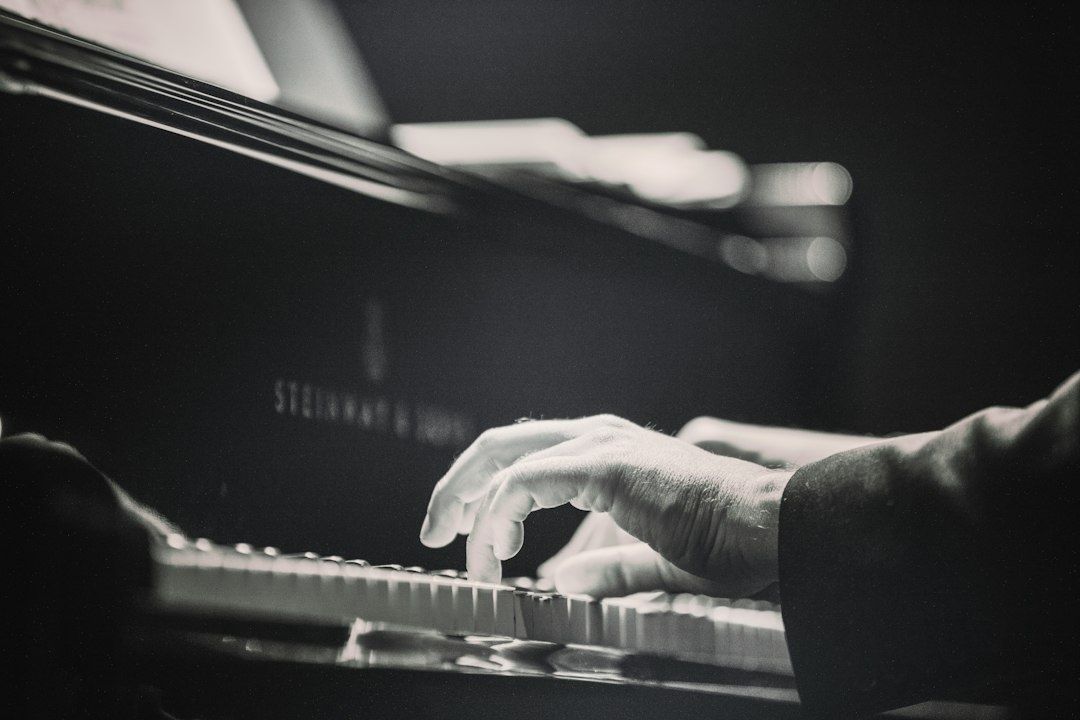
- At the piano bench: feel both feet before the first chord, release the jaw, and let the hands rest on the keys without gripping.
- At the drum throne: sense the sit bones, keep the heels available, and test a barely audible stroke before the opening figure.
- At the microphone: keep one hand or fingertip in gentle contact with the stand when appropriate, using it as an orientation point rather than a support.
- With a guitar or bass: notice the strap across the shoulder and the instrument”s weight against the torso, then reduce unnecessary thumb pressure.
- For vocalists: use the soles, ribs, and lips as separate anchors so attention does not collapse onto the throat.
During the performance, grounding must remain subtle. A small release of the thumb, a fuller contact through the feet, or a widened gaze between phrases can be enough. These actions should be rehearsed at tempo and in context so they become part of musical behavior rather than emergency gestures that attract more self-monitoring.
Step Into the Lights With Steady Hands
Stage fright is not evidence that the performer lacks discipline. It is a surge of available voltage, shaped by anticipation, exposure, memory, and meaning. The task is to prevent that voltage from narrowing the hands, breath, hearing, and attention into defensive patterns. Grounding does not demand a blank nervous system. It builds a bridge from arousal to accuracy, allowing intensity to remain in the sound rather than leaking into unnecessary muscular effort.
At tonight”s rehearsal, run the three-minute reset before the first take and again before a deliberately exposed entrance. At next weekend”s soundcheck, rehearse the exact transition from waiting to playing, including the room noise, the instrument setup, and the first breath. Notice which anchor reliably returns attention to the shared sonic field. With repetition, the backstage freeze can become a recognizable cue: feet to floor, exhale to pulse, hands to texture, gaze to the room, then step into the lights.

